Strategic Partnership Between Russia and Belarus: Joint Military Exercise “Zapad-2025”
The permanent deployment of the Russian contingent in the Republic of Belarus is one of Russia’s immediate strategic priorities, the legal basis for which is the Treaty between the Russian Federation and the Republic of Belarus on Security Guarantees of the Union State of March 13, 2025 [1]. The Treaty legitimizes not only the deployment of the Russian Armed Forces, but also the creation of military facilities (including military bases) on Belarusian territory.
In the context of deepening the strategic Russian-Belarusian partnership, Russia is currently forcing “strengthening the defense space of the Union State” on three main directions [2]:
- training Belarusian military servicemen in higher military educational institutions of the Russian Federation. Currently, more than 300 Belarusian servicemen are being trained in the educational institutions of the Russian Ministry of Defense, where they are mastering modern forms of warfare based on the experience of the “special military operation”, including the use of unmanned systems. According to media reports, on May 14, 2017, a training of UAVs crews under the leadership of the Republican Center for Unmanned Systems of the “Donetsk People’s Republic” (Donetsk) took place in Belarus. At the request of the Belarusian side, instructors came to the training to share their experience gained in the zone of the “special military operation”;
- military-technical cooperation (the Belarusian military-industrial complex has become a complement to the Russian one: about 80 % of Belarusian enterprises are integrated into the Russian military-industrial complex). The potential of the Belarusian military-industrial complex was demonstrated at the “MILEX-2025” arms and military equipment exhibition, where the total amount of contracts signed was more than 390 million US dollars;
- improving the coordination of troops and the work of the headquarters of the two allied states, which should be demonstrated primarily during the joint strategic exercise “Zapad-2025”.
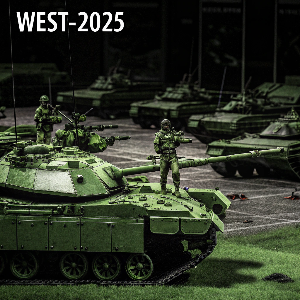
Russia intends to use the joint strategic exercise “Zapad-2025”, the preparations for which have long been in the spotlight of the world media, to deepen its strategic partnership and strengthen cooperation in defense and security. The exercise is to be held simultaneously at training grounds in Belarus and Russia in September. The content of the exercise has been approved, and it will feature an operational episode of confrontation between two coalitions of states: one led by Russia and the other by the notional West, which indicates Moscow and Minsk’s intention to strengthen the regional alliance as opposed to NATO.
During his visit to Minsk, the RF’s Defense Minister Belousov emphasized that “Zapad-2025” would be “exclusively defensive in nature” and would “work out options for joint actions to repulse aggression against the Union State using the Regional Grouping of Troops of Belarus and the Russian Federation and the Coalition Grouping of Troops of Friendly States on several strategic directions” [2], i.e. simultaneously on the western and southern directions. According to media reports, the scenario of the exercise also includes practicing strikes with tactical nuclear weapons, the carriers of which are located in Belarus.
The leader of the Belarusian regime, commenting on the preparations for the exercise, assured that Belarus and Russia “are not going to attack anyone”. Lukashenko once said the same thing about the operational exercise “Allied Resolve-2022”. At the same time, “Zapad-2021” exercise was used as a pretext for a partial redeployment of forces and assets for forward deployment ahead of a larger-scale deployment of troops during the “Allied Resolve-2022” exercise, which transformed into a full-scale invasion of Ukraine by the Russian Armed Forces. In 2021, the Belarusian leadership justified the stay of Russian units in Belarus after the exercise by the need to ensure the security of the southern operational direction on the border with Ukraine.
Since then, the Belarusian regime has reaffirmed its commitment to allied military and political commitments to Russia: in mid-2023 Moscow and Minsk announced the deployment of Russian tactical nuclear weapons in Belarus, and in December 2024, they announced plans to deploy new Russian intermediate-range ballistic missiles “Oreshnik” on Belarusian territory. In the summer of 2024, at the beginning of the Armed Forces of Ukraine’s Kursk operation, Belarusian troops were demonstratively redeployed to the southern border, showing Moscow their readiness to distract the Ukrainian Army from the main front.
At the moment, Russia’s opening of a new front and a repetition of the 2022 scenario from Belarusian territory in 2025 seem unlikely. At the same time, given the geographical location of the Republic of Belarus, potential risks of escalation remain as a result of Russia’s aggressive intentions, refusal to make concessions, and continuation of hostilities in Ukraine. A certain role in these Russia’s intentions is played by Belarus, which has turned into a full-fledged rear and logistics base for Russian troops.
In order to demonstrate “readiness for dialogue, compromise, and reduction of tension” in relations with the West, Belarusian Defense Minister Khrenin made a resonant statement about “reducing the parameters of “Zapad-2025” exercise and moving its main maneuvers deeper into the territory of Belarus from the western borders” [3]. Obviously, the decision to change the format of the exercise, taken by the parties, is aimed at avoiding additional tension in relations with the West, demonstrating allegedly “peaceful” intentions, reducing the level of media attention, and strengthening positions in negotiations on the settlement of the Russian–Ukrainian war.
It should also be borne in mind that the bringing Russian troops to Belarus as part of “Zapad-2025” exercise will leave the Belarusian leadership no choice if Moscow decides to refuse to withdraw some of those troops and deploys them permanently, citing the need to “ensure the security of the Union State in a complicated international situation” as a reason for such a decision. In this context, the additional concentration of Russian Armed Forces within the Regional Grouping of the Union State’s troops (forces) will pose a potential threat to the entire region.
Maria Hutsalo,
expert, PhD in Political Science
The tools used:
[1] https://bintel.org.ua/analytics/geopolitics/garanti%D1%97-bezpeki/
[2] https://xn--c1anggbdpdf.xn--p1ai/actual_comment/242591/
[3] https://belta.by/society/view/hrenin-osnovnye-manevry-uchenija-zapad-2025-perenesut-vglub-belarusi-717503-2025/